Identify the problem
Locate the entry point or damaged component and distinguish the symptom from the cause.
 Odd Couple Roofing
North Atlanta Homeowner Guide
Learn how roof condition, age, repair scope, material compatibility, and cost work together—and why a professional inspection should guide the final recommendation.
Repair may be appropriate when the problem is localized, the surrounding roof is serviceable, and compatible materials allow a durable fix. Replacement may deserve evaluation when problems are widespread, the roof is near the end of its useful life, or repeated repairs no longer make financial sense. Odd Couple Roofing generally evaluates replacement when repair costs approach or exceed approximately 30% of replacement cost, or when an asphalt shingle roof is around 18 years old or older under typical conditions. These are company guidelines—not universal rules—and a professional inspection should determine the recommendation for your roof.
Start with evidence
No single number decides. The recommendation comes from the roof's current condition, the cause and extent of the problem, remaining serviceability, repair durability, material availability, and the relative value of repair versus replacement.
A low-cost repair can still be a poor decision if it cannot be made reliably. A roof's age alone does not automatically require replacement. The purpose of the framework below is to organize the evidence—not replace an inspection.
Roof Decision Framework
We move from the immediate defect to the condition of the whole system, then compare whether a repair can be durable and financially responsible.
Locate the entry point or damaged component and distinguish the symptom from the cause.
Check shingles, penetrations, flashing, decking indicators, drainage, and adjacent slopes.
Consider access, material compatibility, brittleness, matching, and whether the repair can integrate correctly.
Compare the scope and durability of repair with the cost and expected value of replacement.
One isolated defect on an otherwise serviceable roof can point toward repair. Multiple active problems, widespread deterioration, or compromised supporting materials can shift the evaluation.
A small, clearly defined area is different from recurring failures across multiple slopes or roof components.
Material availability, shingle condition, seal integrity, flashing transitions, and surrounding brittleness affect whether a lasting repair is realistic.
Roof Age Timeline
Age is context, not a diagnosis. Installation quality, ventilation, materials, weather exposure, maintenance, and current condition can make roofs of the same age perform very differently.
Localized, repairable issues may favor repair when the surrounding system is in good condition.
Inspection should look closely at recurring repairs, granule condition, sealing, penetrations, and slope-wide wear.
Under typical conditions, Odd Couple Roofing often begins evaluating replacement more closely for asphalt shingle roofs around age 18 or older.
Widespread brittleness, repeated failures, or compromised system components may reduce the value and durability of isolated work.
Company guideline: approximately 18 years is an evaluation point for typical asphalt shingle roofs, not an automatic replacement date or a universal industry rule.
Repair Cost Comparison
Odd Couple Roofing generally evaluates replacement when a properly scoped repair approaches or exceeds approximately 30% of the replacement cost, especially when the roof also has limited remaining serviceability.
A durable, focused repair can provide good value when the surrounding roof is serviceable and the scope is contained.
Replacement deserves comparison when repair consumes a substantial share of replacement cost and does not address broader age or condition concerns.
The 30% figure is a general company guideline. It is not a universal rule, price quote, or substitute for comparing the actual repair scope, replacement scope, and roof condition.
Real Repair Example
A failed roof penetration does not automatically require full replacement. This documented sequence shows a localized pipe-boot repair opened, rebuilt, and finished as a complete detail.
Why repair made sense in this example cannot decide another roof. The surrounding condition and repairability must be inspected for each home.
Real Replacement Example
Replacement addresses the complete roofing surface when inspection findings show that isolated work is unlikely to provide responsible long-term value. This verified project image shows a completed residential roofing system.
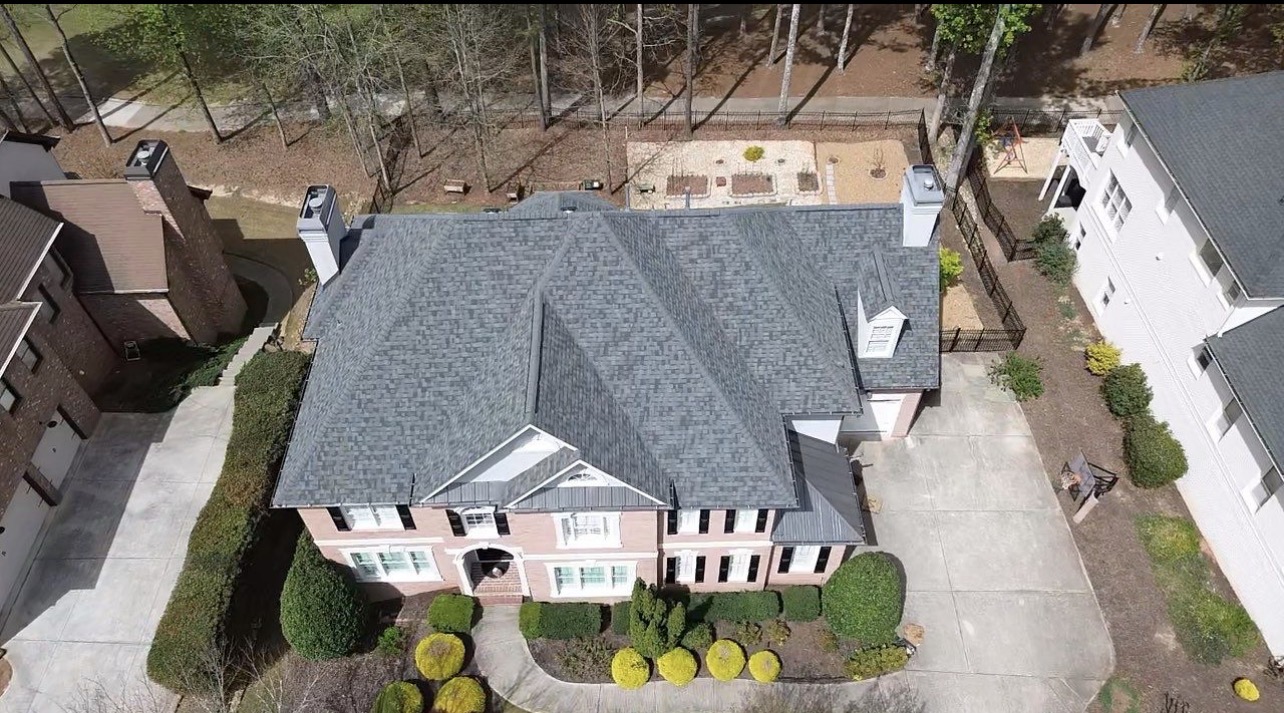
A replacement recommendation should follow inspection of the roof system, explanation of the findings, and comparison with any repairable alternatives.
Problems are widespread, materials are no longer responsibly repairable, repeated work is accumulating, or the roof's overall condition limits repair durability.
Age, cost, or one visible defect alone should not be treated as automatic proof that replacement is required.
Decision Matrix
The matrix organizes common considerations, but no individual row decides the outcome. A professional inspection must interpret how the factors interact on the specific roof.
| Factor | May support repair | May support replacement evaluation |
|---|---|---|
| Extent | Localized, clearly defined condition | Widespread or recurring problems across roof areas |
| Surrounding roof | Serviceable and able to support integration | Brittle, deteriorated, or unable to support durable work |
| Materials | Compatible materials and correct details are available | Matching or integration cannot be completed responsibly |
| Age | Age and observed condition leave reasonable serviceability | Asphalt shingle roof is around 18 years or older under typical conditions and condition concerns are present |
| Relative cost | Repair is durable and meaningfully below replacement cost | Repair approaches or exceeds about 30% of replacement cost and broader concerns reduce its value |
| History | One isolated issue with no pattern of failures | Repeated repairs or multiple active failure points |
“May support” is intentional. These are general company guidelines, not automatic triggers or universal industry standards.
Common Questions
The best choice depends on whether the roof can accept a durable repair and whether that work is responsible compared with the condition and cost of the full system.
No. Around 18 years is a point when Odd Couple Roofing generally evaluates replacement more closely under typical conditions. Installation, materials, ventilation, exposure, maintenance, and current condition still matter.
No. Approximately 30% is a general company guideline for comparing long-term value, not a universal rule. The actual scope, durability, roof condition, and homeowner priorities should be evaluated.
Often, but not always. The source, affected materials, surrounding roof condition, and ability to integrate a durable repair must be confirmed.
Material compatibility and availability can affect repairability. An inspection should determine whether a technically sound repair can still be completed and explain the available options.
Yes. A documented inspection helps define the actual problem and scope so repair and replacement options can be compared more meaningfully.
Download the homeowner guide for later, or schedule an inspection when you’re ready for answers about your specific roof.